Ver todos los artículos
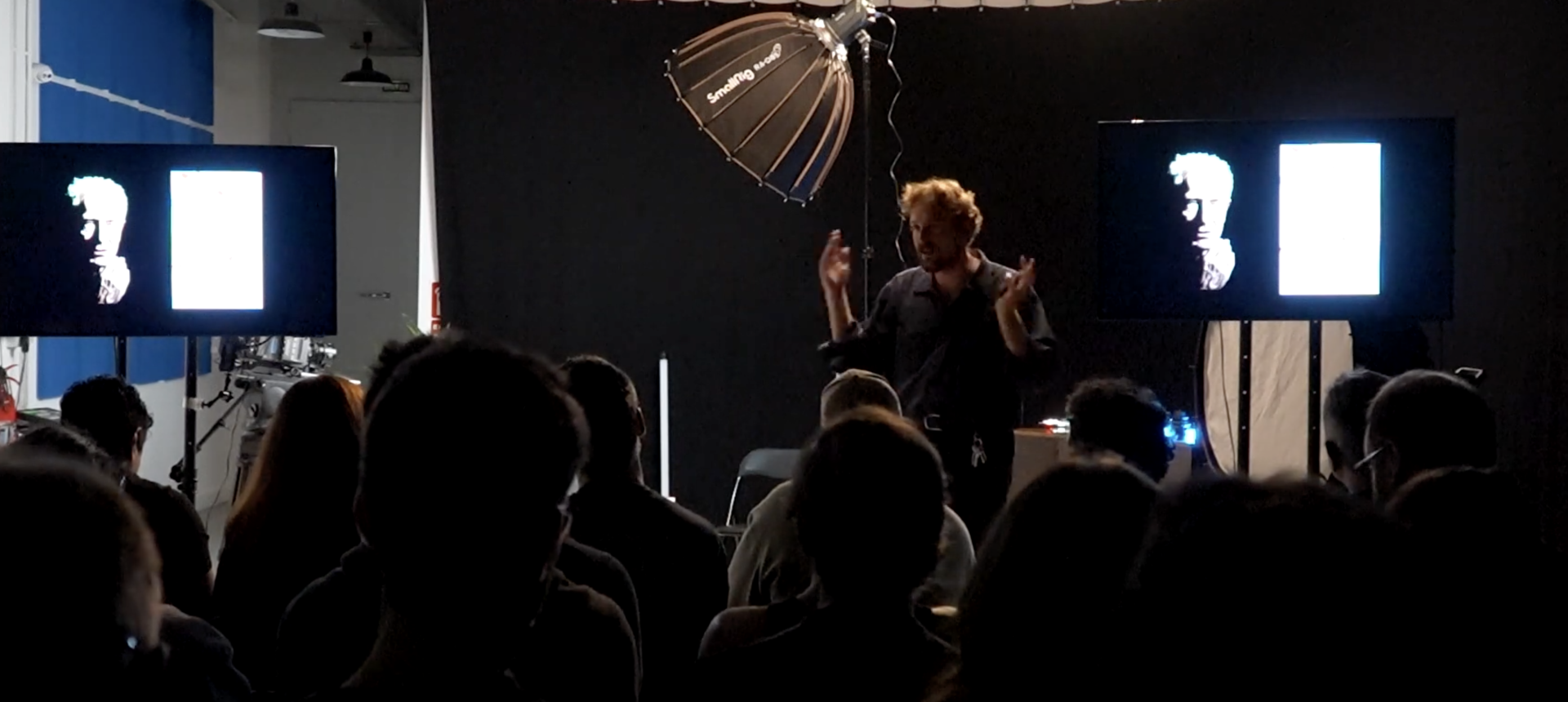
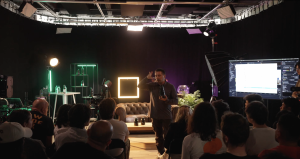
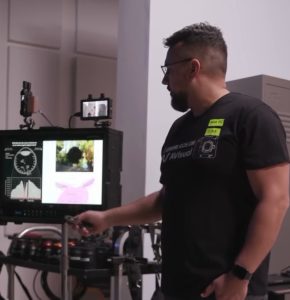
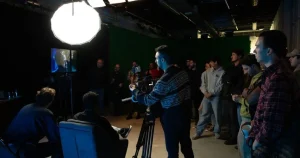
On May 28, 2024, we had the pleasure of hosting the Cinematography and Cinematic Vision Workshop, where we explored creativity with minimal resources through the filming of Toli Drift and Human Hibernation. The session, filled with reflections on light, shadow, perception, and visual poetry, took place in an inspiring and practical environment and was, without a doubt, a unique experience and a complete success.
Workshop Summary
Introduction
The workshop addressed photographic and cinematic vision, exploring the creative process with limited resources and the application of poetic principles in cinematography. Everything was presented through the filming experience of two films: Toli Drift and Human Hibernation.
1. Objective of the Talk
The main objective was to present and demonstrate the cinematographer’s vision, focusing on:
- Poetic and philosophical reflections on light, perception, and mystery.
- Practical examples of shoots with minimal resources.
- Technical application of concepts such as light, shadow, and camera movement.
2. Poetic and Perception Concepts
1. Absence creates Awareness
This central poetic principle states that an excess of light or visibility can be blinding (“the pornography of the excessively visible”). Shadow, silence, and absence reveal the world and enhance visual suggestion.
Examples:
- Interpretation of Paul Valéry’s poem about the blind midday.
- Scene from Hitchcock’s The Birds where the absence of sound generates terror.
- Albert Einstein quote on the sense of mystery.
2. Interpretive Perception
Reality exists, but interpretation is key. The brain decides what to perceive, as shown in:
- The “Young Woman or Old Woman” image.
- The Dream Machine by Ian Sommerville and Brion Gysin.
3. “Moving with the Garden”
Inspired by Gilles Clément (The Garden in Movement), this approach proposes that, during filming, the film should adapt to the reality of the environment instead of rigidly imposing planning. It suggests:
- Defining a few “totem scenes.”
- Allowing the rest of the narrative flow to emerge organically.
3. Cinematic Examples and Equipment
Toli Drift
- Hybrid documentary about Tolyatti (Russia), focused on youth and drift culture.
- Small crew of five people.
- Improvised resources: borrowed crane, tractor to gain height.
Human Hibernation
- Hybrid fiction about a society that begins to hibernate due to a climate crisis.
- Inspired by the Echidna animal and Donna Haraway’s multi-species theory.
Featured Lenses
- Sigma 18-35 and 50-100 Zooms: fast, versatile, and practical (focus and zoom rings remain in the same position).
- Use of the Soft FX 1 filter to soften the image.
4. Technical Application in Lighting
Light Direction
- Applying the “Absence creates Awareness” principle by generating shadows that build volume and suggestion.
- Avoiding flat and excessive light.
Ambient Light
- Working with available light (windows, sunlight, desk lamps).
- Using light as direction to generate contrast and atmosphere, especially in low key (Human Hibernation).
Workflow and Exposure
- Recording in Canon Log 2 or Log 3 to make the most of the dynamic range.
- Using ND filters to control light and preserve detail in highlights.
- The reflector/bounce board works as a natural and soft second light source.
Nanlux Lights
- Models: Evoke 900, 1200, 2400, and 10000, with CRI 98.
- Power and versatility: the 2400 simulates a 4K HMI; bicolor and RGB (Power Slim).
- Remote control and scene creation via the Nanlink app.
Canon C80 and C400 Cameras
- C80: evolution of the C70, 6K Full Frame sensor, RAW recording, SDI output, and IP compatibility.
- Both cameras with Triple ISO and great dynamic range.
- Control tools: Waveform for backgrounds and False Color to measure skin and tones accurately.
Questions and Answers
Which cameras were presented at the workshop?
The Canon C80 and C400 were presented, highlighting their Full Frame sensor, RAW recording capability, and great dynamic range, ideal for projects with limited light or reduced resources.
What new features does the Canon C80 offer?
- Evolution of the C70 with a 6K Full Frame sensor.
- Internal RAW recording and SDI output.
- Triple Base ISO, allowing creative control in different lighting conditions.
- Compatible with IP control and measurement tools such as Waveform and False Color.
What does the Canon C400 provide compared to the C80?
- It shares the same sensor and processor as the C80, offering the same image quality.
- Differences in format, cooling, and storage slot options.
- Ideal for productions with greater equipment support or more demanding shoots.
Which lenses were highlighted in the workshop?
- Sigma Zooms 18-35mm and 50-100mm:
- Fast and versatile.
- The focus and zoom rings remain in the same position, facilitating quick adjustments.
- Use of Soft FX 1 filter to soften the image and create atmosphere.
Which lights were used and what are their characteristics?
- Nanlux Evoke 900, 1200, 2400, and 10000:
- CRI 98, guaranteeing accurate colors.
- The Evoke 2400 simulates a 4K HMI.
- Bicolor and RGB models with remote control via the Nanlink app.
- They allow for the creation of scenes with directed or ambient light according to the narrative.
How was lighting applied in the workshop?
- Key principle: “Absence creates Awareness”, generating shadows and contrast for volume and suggestion.
- Use of available light (windows, desk lamps, sunlight) and reflectors to complement.
- Recording in Canon Log 2 or Log 3 and ND filters to make the most of the dynamic range.
What are the advantages of using Canon C80 and C400 in projects with few resources?
- Professional sensor and processor in compact and manageable bodies.
- Allows working with a reduced crew without sacrificing quality.
- Flexibility in recording and control of exposure, light, and color.