Ver todos los artículos
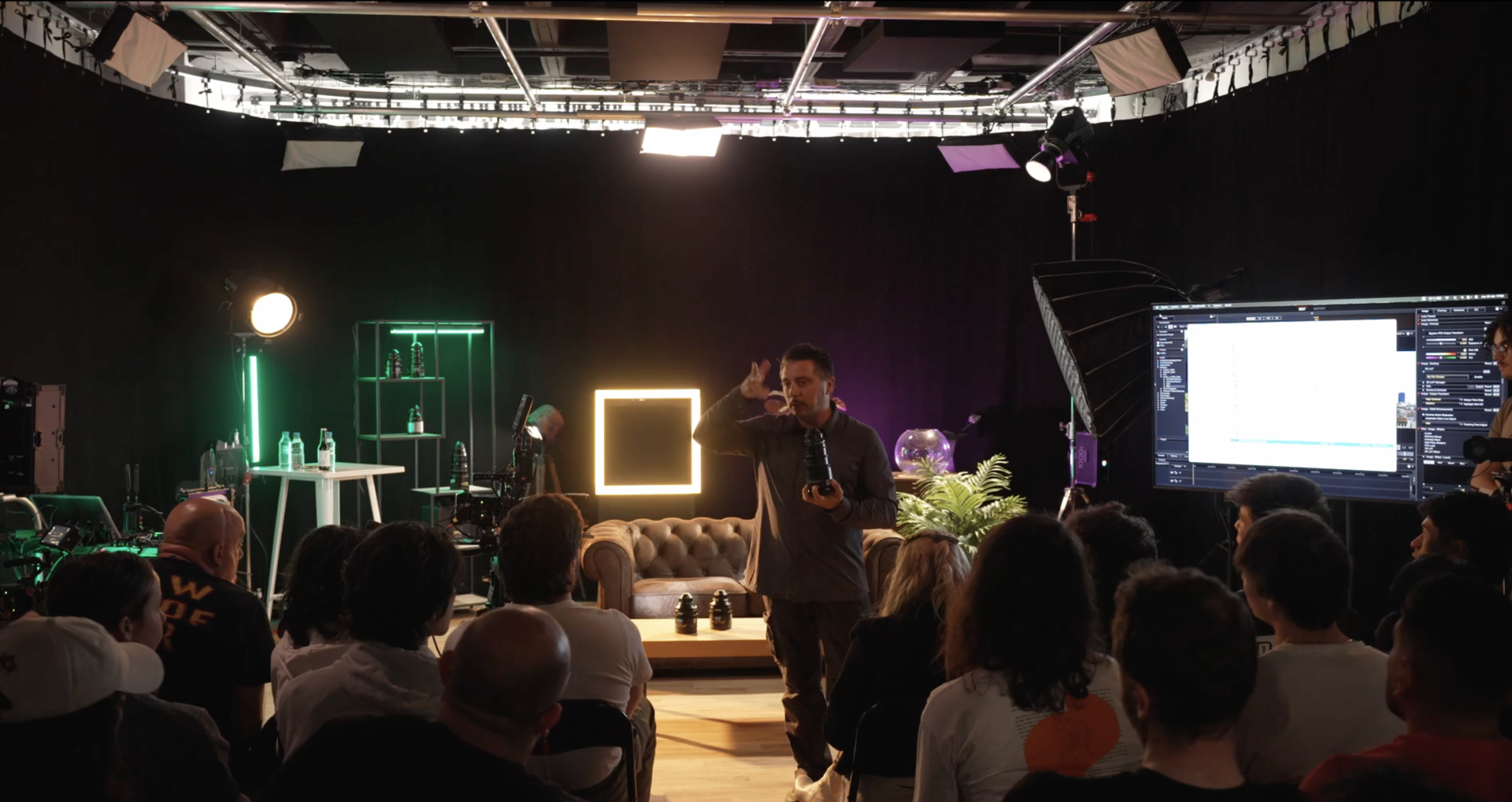
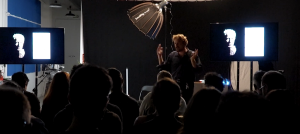
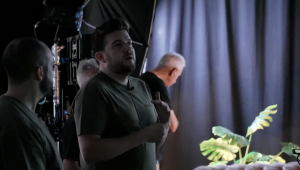
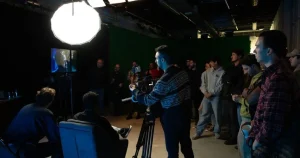
On April 24, 2025, we had the pleasure of sharing with all of you the RED and DZOfilm Workshop, which we organized at our AVisual Madrid studios. It was, without a doubt, very different from what we are used to and a complete success!
Workshop Summary
1. Introduction
- Acknowledgements:
- To AVisual for the invitation.
- To Catch Cámara and Isabel for their support.
- To AVisual for the invitation.
- Purpose of the talk:
- To present cameras, lenses, and work tools.
- To show how they are used in real projects (commercials, documentaries, nature).
- To present cameras, lenses, and work tools.
2. Personal Presentation and Philosophy
- The speaker is a director of photography, not a camera salesperson.
- Cameras and lenses are tools for storytelling, not ends in themselves.
- Camera choice depends on the project and the operator’s comfort, not just technology.
3. RED Cameras
- Models presented:
- Komodo (simpler, compact).
- Komodo X (more advanced, high-end).
- Komodo (simpler, compact).
- Advantages of RED cameras:
- High resolution (6K or 8K), allowing for cropping and increased frames per second.
- RAW format, with wide color depth and control in color grading.
- Dynamic ISO: allows light adjustment without losing quality.
- Compact, efficient in battery consumption, and practical handling in extreme conditions.
- High resolution (6K or 8K), allowing for cropping and increased frames per second.
- Uses:
- Nature documentaries, projects in extreme climates, complex shoots with limited resources.
- Flexibility to work indoors, outdoors, and in situations with variable lighting.
- Nature documentaries, projects in extreme climates, complex shoots with limited resources.
4. DZO Lenses
- Types:
- 9-16 lenses, anamorphic, and other specialized lenses.
- 9-16 lenses, anamorphic, and other specialized lenses.
- Advantages:
- Versatility for commercial and advertising projects.
- Allow capturing high-quality images in complex conditions (humidity, cold, macro).
- Versatility for commercial and advertising projects.
- Philosophy:
- Lenses are tools to achieve creative results; not all lenses are used all the time.
- New brands (like DZO) have gained presence by offering innovative and more versatile alternatives.
- Lenses are tools to achieve creative results; not all lenses are used all the time.
5. Evolution of the Audiovisual Market
- Traditionally, cameras and lenses were dominated by established brands.
- Recent innovations:
- Shift from HD to 4K and now to 6K-8K.
- Camera simplification: less external hardware, more autonomy.
- Evolution in lighting: LEDs and more efficient systems.
- Shift from HD to 4K and now to 6K-8K.
- Impact for the director of photography:
- More creative control, fewer technical limitations.
- Ability to work alone or with limited resources.
- More creative control, fewer technical limitations.
6. Techniques and Best Practices
- Working with appropriate ISO according to lighting:
- Interiors: Low ISO.
- Exteriors: High ISO, protect highlights.
- Interiors: Low ISO.
- Importance of RAW handling:
- Recover shadows and highlights without losing detail.
- Precise color adjustments (CDL, wheels, dominant color correction).
- Recover shadows and highlights without losing detail.
- Practical examples:
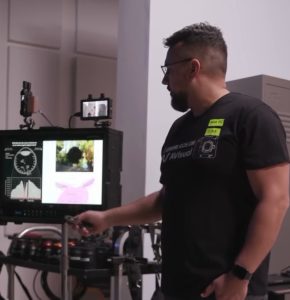
- Use of RED CineX and monitor to visualize histogram, vectorscope, contrast, and color correction.
- Real experience: shoots in M30, Iceland, Costa Rica.
- Use of RED CineX and monitor to visualize histogram, vectorscope, contrast, and color correction.
7. Work Philosophy
- Production: do not idealize others doing the technical work; the operator must have total control.
- Tools (cameras, lenses, lights) should be an extension of the creative process, not an obstacle.
- Technique must serve narrative and creativity.
8. Conclusion
The choice of tools depends on the project, shooting conditions, and operator comfort.
The talk combines theory, practical examples, and demonstrations.
Final objective:
To demonstrate the versatility of cameras and lenses.
To teach how to apply them in different contexts to improve creative and technical quality.
Questions and Answers
What cameras were presented at the workshop?
The RED Komodo and Komodo X were presented, focused on offering solutions for commercial projects, documentaries, and shoots in extreme conditions.
What are the outstanding features of the RED Komodo and Komodo X cameras?
- High resolution: 6K or 8K, ideal for cropping and increasing frames per second.
- RAW recording, with wide color depth and control in color grading.
- Dynamic ISO, to adjust light without losing quality.
- Compact, battery-efficient, and easy to handle outdoors or in difficult climates.
What types of projects are ideal for the RED cameras presented?
- Nature and travel documentaries.
- Shoots in extreme conditions (cold, humidity, complex interiors/exteriors).
- Productions requiring flexibility and total operator control.
What lenses were presented and what are their characteristics?
- DZO 9-16 and anamorphic lenses, along with other specialized ones.
- Versatile for advertising, cinema, and documentaries.
- Resistant in demanding conditions such as cold, humidity, or macro.
- They seek creative results rather than indiscriminate use; each lens has a narrative purpose.
What advantages do these DZO lenses offer compared to traditional brands?
- Innovation and versatility, offering lighter and more adaptable alternatives.
- They allow maintaining high image quality in projects with limited resources.
- Good balance between functionality and creativity, ideal for directors of photography working alone or with small teams.
How were these cameras and lenses applied in the workshop?
- Use of RED CineX and monitors to control histogram, vectorscope, and color correction.
- Recordings in different environments: interiors, exteriors, extreme climates.
- Adjustment of ISO and RAW to optimize exposure and shadow/highlight recovery.
- Real examples of shoots in M30, Iceland, and Costa Rica.
What is the speaker’s philosophy for using these tools?
- Cameras, lenses, and lights are extensions of the creative process, not ends in themselves.
- The operator must have total control of the camera and the narrative.
- Technique always serves the story and aesthetics of the project.