Ver todos los artículos
Types of Batteries:
Choosing the right battery is crucial, as your camera, the most important element, depends on it. For this reason, it is essential to use a battery that is compatible and meets the demands of your project.
Today, the market offers a wide range of options. The most prominent are the following:
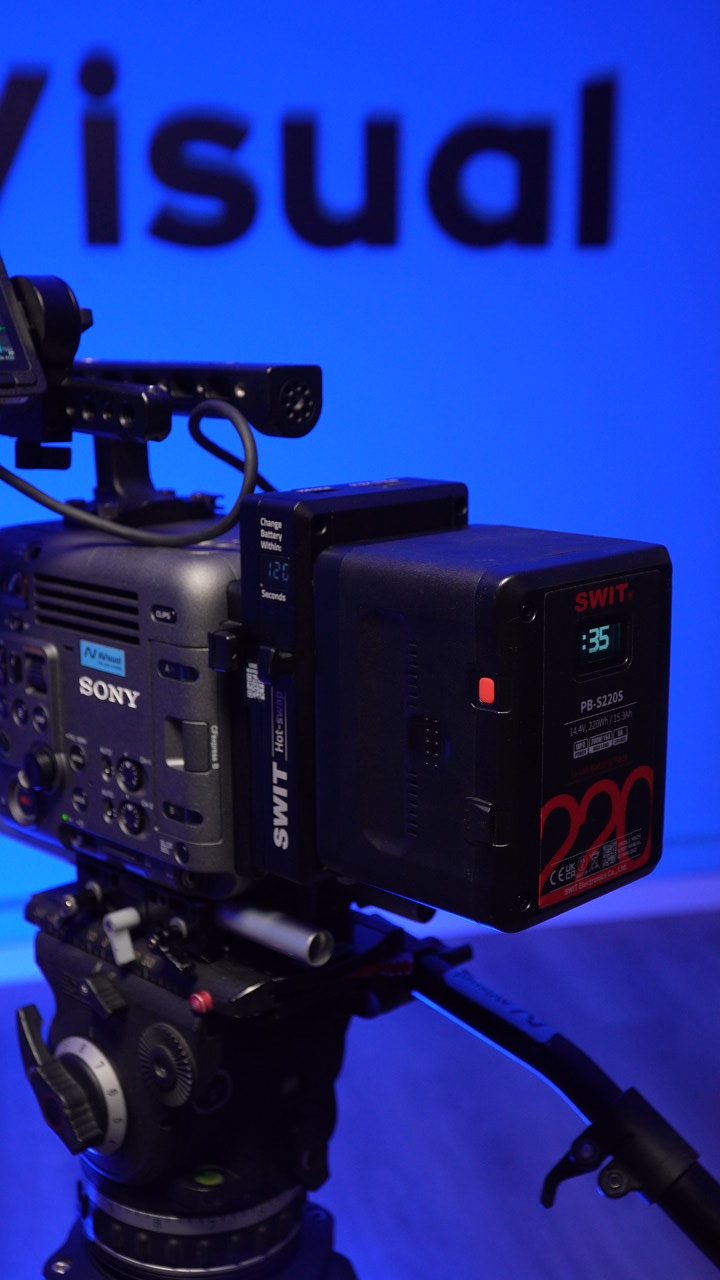
- V-lock: V-lock batteries are a standard in the professional audiovisual industry due to their high capacity, reliability, and versatility. There are different brands and models, ranging from compact mini V-lock options to higher capacity batteries, such as the D-155MS (155 Wh) or the SWIT PB-S220S (220 Wh).
These batteries are highly valued for their long duration and compatibility with most digital cinema cameras, including popular models like the ARRI Alexa Mini or the RED Komodo.
- NP: NP batteries are common in mid-range mirrorless and DSLR cameras, offering a good balance between autonomy and convenience. Various capacities exist: for example, the Sony NP-FW50 is found in models like the A6000, A6300, and A7s II. For newer cameras with higher power consumption, such as the A7s III, higher capacity batteries like the NP-FZ100 are used.
Among the most common batteries in mirrorless and DSLR cameras, we also find LP batteries, common in models like the Canon EOS R5 C or the Blackmagic Pocket Cinema Camera 6K.
- BP: BP batteries, known for their high capacity and durability, are ideal for cinema and professional video cameras. They are commonly found in Canon Cinema models, such as the BP-A30, used in the Canon C200.
What Determines Battery Life?
A battery’s life does not only depend on its capacity in milliampere-hours (mAh) or watt-hours (Wh), but also on how and under what conditions the camera is used, or even the environmental factors of the shoot.
Some of the key aspects that influence its autonomy are:
- Camera type: (DSLR, mirrorless, cinema): Mirrorless and digital cinema cameras tend to consume more battery than DSLRs, mainly due to the constant use of screens, electronic viewfinders, etc.
- Resolution: The higher the resolution and bitrate, the shorter the battery life.
- Recording duration (continuous, short shots…): Continuous recording (long interviews or events) drains the battery faster than a session with short shots and pauses between takes.
- Use of external accessories connected to the camera: External accessories connected to the camera significantly increase power consumption.
- Temperature: Extreme cold reduces the efficiency of lithium batteries, causing them to discharge faster.
- Activated functions: Options such as continuous autofocus or internal stabilization involve greater processor use and increase power consumption.
- Battery condition: Old or poorly maintained batteries lose capacity over time. They can perform up to 30-50% less than a new one.
How to Detect When Your Battery is Reaching the End of its Lifespan?
Over time, camera batteries lose capacity and can fail at a critical moment. It is essential to consider that, after intensive use for more than two years, it is indispensable to replace them to ensure optimal performance.
Additionally, there are other signs you should not ignore that indicate the battery is worn out. Below, we list them:
- It discharges faster than usual
- Its charge level drops suddenly or it turns off directly
- Long or abnormal charging period
- Frequent overheating
Conclusion
Battery performance and duration are key factors to consider. For this reason, choosing the right type for your camera and project, understanding how usage conditions influence it, and knowing how to identify when a battery is worn out is important for proper work optimization.
Frequently Asked Questions:
How long does the FX3 battery last?
The NP-FZ100 battery for the Sony FX3 lasts between 75 and 135 minutes, depending on usage.
Does recording in 4K consume more battery than in FHD?
Yes, recording in higher resolutions demands more processing and storage, which increases power consumption.
Does cold or heat affect battery performance?
Yes, cold reduces battery efficiency and autonomy, while excessive heat can damage it.
Is it better to turn off the camera between takes to save battery?
No, turning off the system between takes can be counterproductive, as the energy spent to turn on the camera can be greater than that used while the camera is idle.
Can I use a larger battery for longer duration?
Yes, as long as it is compatible with your camera and does not affect its operation or portability.