Ver todos los artículos

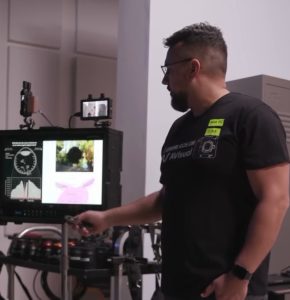
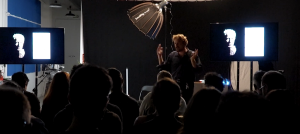
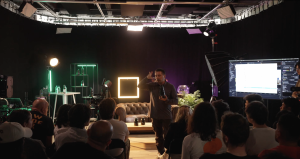
On April 25, we held a free workshop at AVisual STUDIOS with Sigma and Reflecta, featuring cinematographer Artur-Pol Camprubí, analyzing his projects with the Sigma cinema lenses from the High Speed Prime range. If you were unable to attend, you can watch it below and learn everything about these cinema lenses.
Workshop Summary
Introduction
The talk presents the work of a young director through two films: “Tolyatti Adrift” and “The Human Hibernation”, both characterized by their independent, experimental, and poetic approach.
The director reflects on how to create cinema with limited resources, the relationship between perception, light, and shadow, and the role of mystery and absence as expressive elements in visual and sound narrative.
1. “Tolyatti Adrift”: Youth, Crisis, and Resistance
Context and Theme
- Set in Tolyatti, a Russian city symbolizing Soviet pride for its automotive industry (the Lada factory).
- After the fall of the USSR and the closure of several plants, Tolyatti went from being one of Russia’s most prosperous cities to one of its poorest.
- The film establishes an autobiographical parallel with the director, originally from Abrera (Barcelona), where an automotive industry (SEAT) also existed and declined over time.
Plot and Symbolism
- It tells the story of Tolyatti teenagers who, in a counter-cultural gesture, rescue old Soviet cars to engage in illegal races as a form of expression and protest.
- This youth movement represents the search for identity and resistance against economic and social emptiness.
- The title “Tolyatti Adrift” symbolizes this feeling of generational disorientation.
Production and Filming
- A small and creative project, carried out by a team of only five people.
- The lack of resources was compensated with technical ingenuity, such as borrowing a crane or using a tractor with a pallet to film aerial shots.
- The director emphasizes the value of flexibility and improvisation in independent shoots.
- The lenses used (Sigma 18–35 mm and 50–100 mm) were key for their versatility and luminosity, allowing scenes with low light to be resolved.
2. “The Human Hibernation”: Ecological and Poetic Fiction
Synopsis
- A hybrid film between documentary and fiction that imagines a future where humanity, facing a climate crisis, learns to hibernate.
- Through the eyes of a young woman who awakens to find her brother has disappeared, the story reflects on solitude, time, and human transformation.
Style and Message
- Combines a poetic perspective with a reflection on human adaptation to environmental collapse.
- An example of how quality cinema can be made with limited means, prioritizing concept and atmosphere over extensive resources.
- The film has received international recognition, just like Tolyatti Adrift, demonstrating the potential of independent cinema.
3. Sensory Exercise and Reflection on Perception
- In her workshops, the director proposes an audio and light exercise where the audience closes their eyes and listens to sounds for 10 minutes to explore how we perceive images without seeing them.
- The experience reveals that even with closed eyes we continue to “see,” and serves to discuss perception as an active and interpretive phenomenon.
- She quotes philosopher Rafael Argullol and his reading of a poem by Paul Valéry, in which excessive light causes blindness, symbolizing that only by integrating shadow do we truly begin to see.
4. Absence as a Form of Expression
- She analyzes a scene from “The Birds” by Alfred Hitchcock, highlighting that the most unsettling aspect is not the attack, but the absence of sound.
- This conscious decision to eliminate noise creates an atmosphere of tension and mystery, demonstrating that silence can say more than an excess of information.
- She quotes a phrase from Einstein:
“The most beautiful experience a man can have is the sense of the mysterious.”
With it, she argues that art is born from wonder and from what we do not fully understand.
5. Theory of Perception and Light
- Based on the Gestalt image of “The Young Woman and the Old Woman”, she reflects on how the brain interprets what it sees: reality is the same, but meaning depends on the perspective.
- She mentions the book “Catching the Light” by Arthur Zajonc, who studies the history of light from mythologies to quantum physics.
- The director connects these ideas with Goethe, recalling that blue and shadow are part of light intensity:
“Only when shadow appears does consciousness also appear.” - In cinema, this translates to absence (of light, sound, explanation) being the element that generates true emotion and meaning.
6. Technical Reflection: Lenses and Versatility
- In small productions, Sigma zoom lenses (18–35 mm and 50–100 mm) are essential for their speed, range, and aperture (f/2), allowing adaptation to variable lighting conditions.
- The director emphasizes that technology must serve creativity, not the other way around: limited resources can drive more imaginative solutions.
Conclusion
The talk combines philosophical reflection and practical experience, showing how cinema can be a tool for exploring perception, mystery, and consciousness.
Through Tolyatti Adrift and The Human Hibernation, the director demonstrates that with ingenuity, sensitivity, and limited means, it is possible to create profound and visually powerful works.
Her final message invites us to view cinema as an act of perception and discovery, where light and shadow, sound and silence, reveal the true essence of the visible.
Questions and Answers
What lenses were used in “Tolyatti Adrift”?
- Zoom Sigma 18–35 mm and 50–100 mm.
- Highlighted for their versatility and luminosity, they allow filming in low light conditions and adapting to shoots with limited resources.
Why were these lenses chosen for small projects?
- They combine speed, range, and f/2 aperture, offering flexibility in scenes with variable lighting.
- They allow covering different shots without constantly changing lenses, ideal for small teams.
What role do light and sound play in these films?
- The relationship between perception, light, and shadow is explored as a narrative tool.
- The absence of light or sound is used as an expressive resource, creating mystery and emotion.
What practical exercises were carried out in the workshops?
- Sensory exercises of audio and light, where the audience closed their eyes to perceive images without seeing them.
- Demonstration of how shadow, light, and silence can enhance visual and sound narrative.
What philosophy guides the use of equipment in these films?
- Technology is at the service of creativity, not the other way around.
- Limited resources foster ingenious and imaginative solutions.
- Lenses and tools are chosen to maximize expression and adaptability, not just for their brand or technology.