Ver todos los artículos
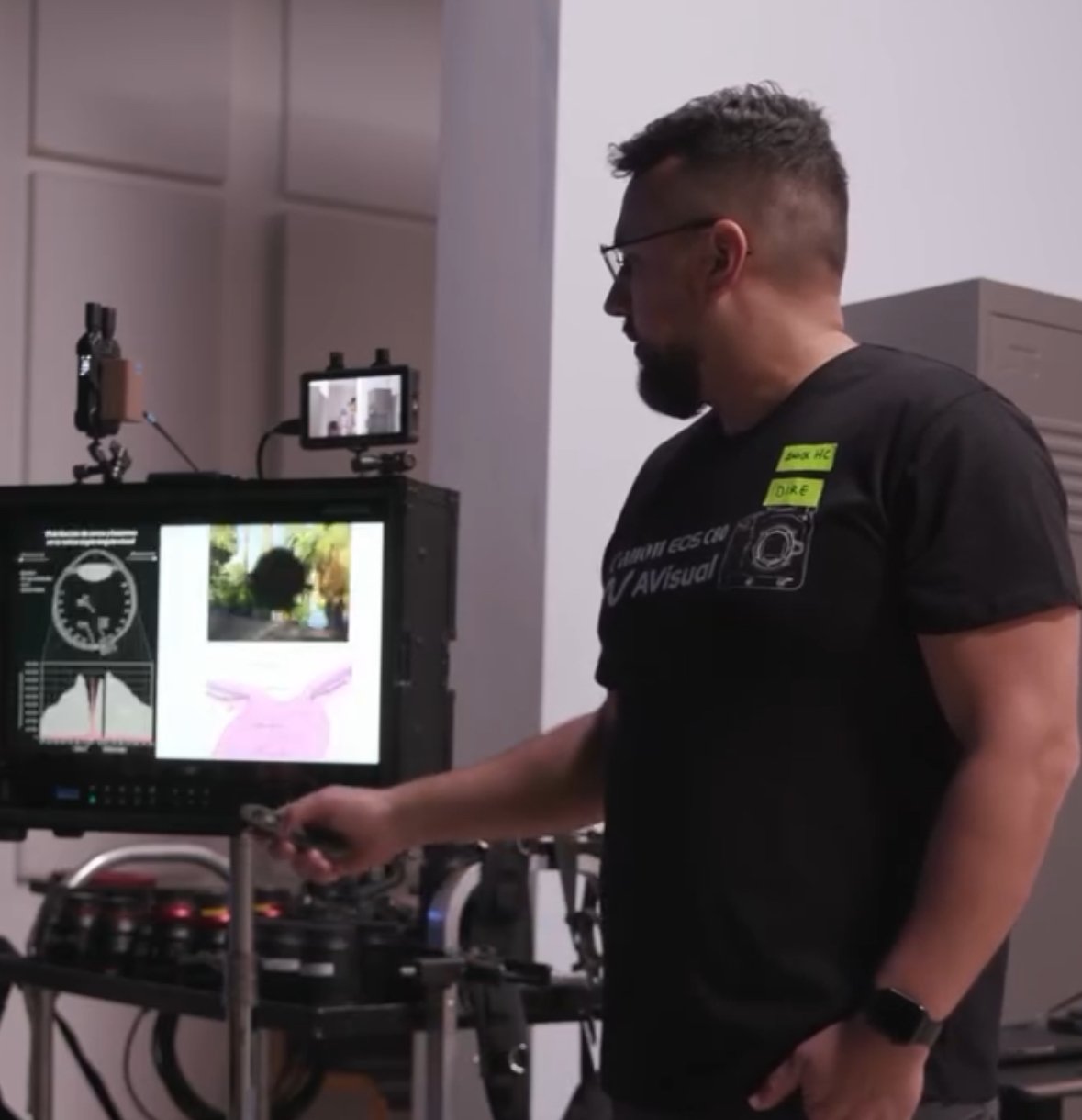
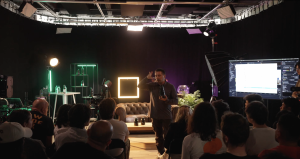
On May 22nd, we had the pleasure of sharing the Canon C80 Workshop with all of you, in collaboration with Canon and led by Aniol HC. Organized at our AVisual Barcelona studios, it was undoubtedly very different from what we are used to, and a complete success!
A huge thank you to everyone who attended and participated. It was an evening of great learning, networking, and fun, where we had the pleasure of live-shooting a scene with two professional actors and the new Canon C80 cameras.
If you couldn’t attend, don’t worry: here you can relive the full workshop and discover everything these cameras and lenses can bring to your upcoming projects.
Introduction
During the workshop, the new Canon C80 was presented, alongside its “big sister,” the C400, highlighting their technological relationship and shared design philosophy. The speaker, with humor and analogies involving motorcycles and squid, explained the main features, advantages, and operation of the new sensors and Canon’s Triple Base ISO.
Canon C80: Design, Usability, and New Features
The C80 is a camera designed for the filmmaker who works alone or with small teams. Its concept is practical: take it out of the bag and start shooting. Its main new features include:
- Full Frame sensor, much larger than its predecessor, the C70.
- New SD card slots (a highly requested improvement).
- Integrated WiFi connectivity, allowing monitoring and control of the camera from a mobile device or browser, without the need for external applications.
- Improved screen with better visibility and a secure locking system.
- Intelligent Multi-Interface Shoe audio input compatible with external adapters, such as those from Tascam, allowing recording with multiple audio channels.
- Flexible internal recording, from RAW Light to more compressed codecs (MP4, 4:2:0), adapting to both professional productions and quick jobs.
The C80 aims for versatility and flexibility: the same quality and core as the C400, but in a more compact and accessible format.
Canon C400: Same Soul, Different Body
The C400 shares the same sensor and processor as the C80. The difference lies in the format and some design details:
- It uses one SD slot and one CFexpress slot, while the C80 only uses SD.
- A different cooling system and a more robust body.
Both cameras share the same essence: a single sensor, two distinct chassis, adapted to different types of productions.
The “Squid Eye” Sensor: Biological Innovation
The most fascinating point of the presentation was the analogy between the new “stacked” CMOS sensor (Dual Gain Output BSI) and the squid’s eye.
The speaker explained that the human eye has a design flaw: neural wires pass in front of the photoreceptors, creating a blind spot. In contrast, the squid’s eye places the wires behind, achieving sharper, more efficient vision without interference.
Canon, inspired by this natural model, has designed its sensor with the wiring behind the photodiodes, which allows for:
- Greater light capture.
- Reduced electronic noise.
- Improved signal-to-noise ratio.
- Achieving higher sensitivity and dynamic range.
Thanks to this structure, Canon has been able to integrate three readout circuits, leading to the new Triple ISO Base.
Triple ISO Base: How it Works
The new system incorporates three native base ISOs (800, 3200, and 12,800), each with its own analog circuit.
This allows for recording with less noise at high ISOs, breaking the myth that “higher ISO means more noise.”
Tests showed that, under certain conditions, ISO 12,800 has less noise than 800, thanks to the use of the appropriate circuit.
The speaker explained that to obtain the cleanest image, it’s not enough to choose just any ISO, but the correct base. For example, if you want to shoot at ISO 1600, it’s better to use the 3200 base and lower it, rather than starting from 800 and increasing it.
This requires a good understanding of the camera but offers enormous creative control.
Dynamic Range and Tonal Distribution
Regarding dynamic range, the three bases offer similar values, although their distribution varies:
- At low ISOs, detail in shadows is gained.
- At high ISOs, highlights are better protected.
This allows adapting exposure according to the scene: - In dark scenes, it’s advisable to work with low ISO (more detail in shadows).
- Outdoors with abundant light, use high ISO (more headroom in highlights) and compensate with ND.
Canon also offers an “Auto Base ISO Selection” mode, which automatically selects the optimal base according to the codec and color profile (Canon Log 2, 3, or Rec709), simplifying work without needing to memorize settings.
Demonstrations and Real-World Tests
To demonstrate the sensor’s capabilities, noise tests, dynamic range, and real recordings were shown with the C80 and C400, using Canon RF Prime lenses.
The clips were recorded at different ISOs and with minimal post-production, evidencing the sensor’s cleanliness, consistency, and detail in all conditions.
Practical Exercise and Closing
The workshop concluded with a shooting challenge: attendees had to record a scene with different cameras and optics, applying what they had learned. Canon, AVisual, and other collaborating brands provided professional equipment for the practice, including actors and a script.
The session closed with thanks to the participants and the technical team, highlighting Canon’s technological innovation and the educational focus of the event, which combines technical theory with practical experience.
Questions and Answers
What is the Canon C80?
The Canon C80 is a compact cinema camera with a Full Frame sensor, designed for creators who need lightweight, versatile equipment ready to shoot instantly.
What new features does it incorporate compared to previous models?
The C80 includes:
- A larger and more sensitive Full Frame sensor.
- Dual SD card slots for flexible recording.
- Integrated WiFi to control the camera from a mobile device or browser.
- A redesigned screen with improved visibility and secure locking.
- Multi-Interface Shoe audio input, compatible with Tascam accessories.
- Internal recording in RAW Light, XF-AVC, and MP4.
Does it share technology with the Canon C400?
Yes. The C80 shares the same sensor and processor as the C400, offering the same image quality in a more compact and accessible body.
What is the new “stacked” sensor of the C80?
It is a BSI CMOS sensor with a “stacked” structure, inspired by the biology of the squid’s eye, where the wiring is placed behind the photodiodes. This allows for:
- More light capture.
- Less noise.
- Better dynamic range and sensitivity.
What is the Triple ISO Base of the Canon C80?
The C80 offers three native base ISOs: 800, 3200, and 12,800, each with its own circuit.
This ensures very clean images, even at high sensitivities.
Why do some high ISOs have less noise than low ones?
Because each base ISO is optimized for its own light level. In many scenes, using the 12,800 base offers less noise than artificially increasing from the 800 base.
How to choose the appropriate base ISO?
- ISO 800 → dark scenes or interiors.
- ISO 3200 → intermediate situations.
- ISO 12,800 → very brightly lit exteriors or scenes with intense lights (protects highlights).
You can also activate Auto Base ISO mode, which automatically chooses for you.
What recording formats does the C80 support?
It records in:
- RAW Light (high quality and post-production flexibility).
- XF-AVC and MP4 with 4:2:2 and 4:2:0 options as needed.
What type of user benefits most from the Canon C80?
Filmmakers working alone, content creators, small production companies, and projects that require speed, cinematic quality, and a simple workflow.
Is the C80 suitable for professional shoots?
Yes. Although compact, it shares the same sensor as the C400, offering professional quality for digital cinema, advertising, documentaries, and corporate projects.