Ver todos los artículos

In the world of cinema, color correction is fundamental to creating the right atmosphere and conveying the desired emotions. LUTs (Look-Up Tables) are essential tools in this process, allowing filmmakers to quickly apply predefined color and contrast adjustments. In this article, we will explore the most well-known LUTs in the film industry and provide examples of how they have been used in prominent productions. Additionally, we will show you how AVisual PRO can help you obtain the necessary equipment for your audiovisual projects.
What are LUTs?
A LUT (Look-Up Table) is a tool used in video and film post-production to modify or correct the color of an image. Basically, a LUT is a reference table that takes the colors of an original image and “maps” them to other predetermined color values, thereby transforming the visual appearance of the image. There are two main types of LUTs:
1D LUTs: These individually affect the red, green, and blue color channels.
3D LUTs: These manipulate colors in a three-dimensional space, allowing for more complex and precise transformations.
What are LUTs used for?
LUTs are used in various situations within the color workflow of film, television, and video:
Color correction: LUTs can be adjusted to correct colors that were captured incorrectly or to maintain consistency across scenes, ensuring that colors look correct and uniform throughout the entire production.
Film emulation: In digital productions, LUTs are often used to emulate the look of specific celluloid film stocks, such as Kodak 2383 or Fuji 3513, providing that classic cinematic “look” without using physical film.
Quick on-set visualization: During filming, LUTs can be temporarily applied to reference monitors so that directors and filmmakers can see what the final product will look like after color correction, even if they are still recording in a flat format like LogC or S-Log.
Creativity: LUTs are also creative tools that allow for the creation of unique “looks” for films, commercials, and music videos. For example, a LUT can transform a scene to have a cooler or warmer tone, or to create a specific atmosphere such as a “vintage” or “sci-fi” look.
Most Well-Known LUTs in the Film Industry
Rec.709
The Rec.709 LUT is one of the most widely used, especially in television and online video. It is designed for the Rec.709 color space standard, which is common in HD television. It provides a natural and balanced look, ideal for a variety of applications.
The television series “Breaking Bad” used the Rec.709 LUT to achieve a naturalistic look, allowing the dramatic elements of the story to stand out without visual distractions.

Source: movieluts.gumroad.com
Kodak 2383
This LUT emulates the look of the famous Kodak 2383 film print stock, known for its rich saturation and deep contrasts. It is very popular in film productions seeking a classic film aesthetic.
Movies that were originally shot on film and then printed using Kodak 2383 include many Hollywood productions until the full transition to digital workflows. Some notable examples of directors who have used Kodak 2383 in their films include:
- Christopher Nolan in films such as Inception and The Dark Knight.
- Quentin Tarantino in films such as The Hateful Eight.
- George Miller in Mad Max: Fury Road used the Kodak 2383 LUT to highlight the intense colors of the desert and the characters, creating a visually striking world.

Source: movieluts.gumroad.com
ARRI Alexa LogC to Rec.709
Developed by ARRI, this LUT converts the LogC color space from Alexa cameras to the Rec.709 standard. It is crucial for converting the flat, washed-out images captured in LogC into something closer to the final product.
Many films and television shows shot with ARRI Alexa cameras and intended for HD distribution are captured in LogC and then converted to Rec.709, such as:
- Game of Thrones: Filmed on ARRI Alexa and distributed in HD, this process was used to optimize the image for standard screens.
- The Revenant: ARRI Alexa cameras were used, applying the LogC to Rec.709 LUT to maintain rich detail in shadows and highlights, which was crucial for its scenes in difficult lighting conditions.

Source: movieluts.gumroad.com
Fuji 3513
This LUT emulates the Fuji 3513 print film, recognized for its warm tones and natural color balance. It is perfect for dramas and romantic films.
- “Memoirs of a Geisha” (2005): This film, known for its rich color palette, was one of many that employed Fuji 3513.
- “The Last Samurai” (2003): With its visually stunning cinematography, this film also benefited from the warmth and texture provided by Fuji 3513.
- “La La Land” (2016), directed by Damien Chazelle, used this LUT to accentuate the vibrant colors of Los Angeles, contributing to its dreamy and nostalgic atmosphere.
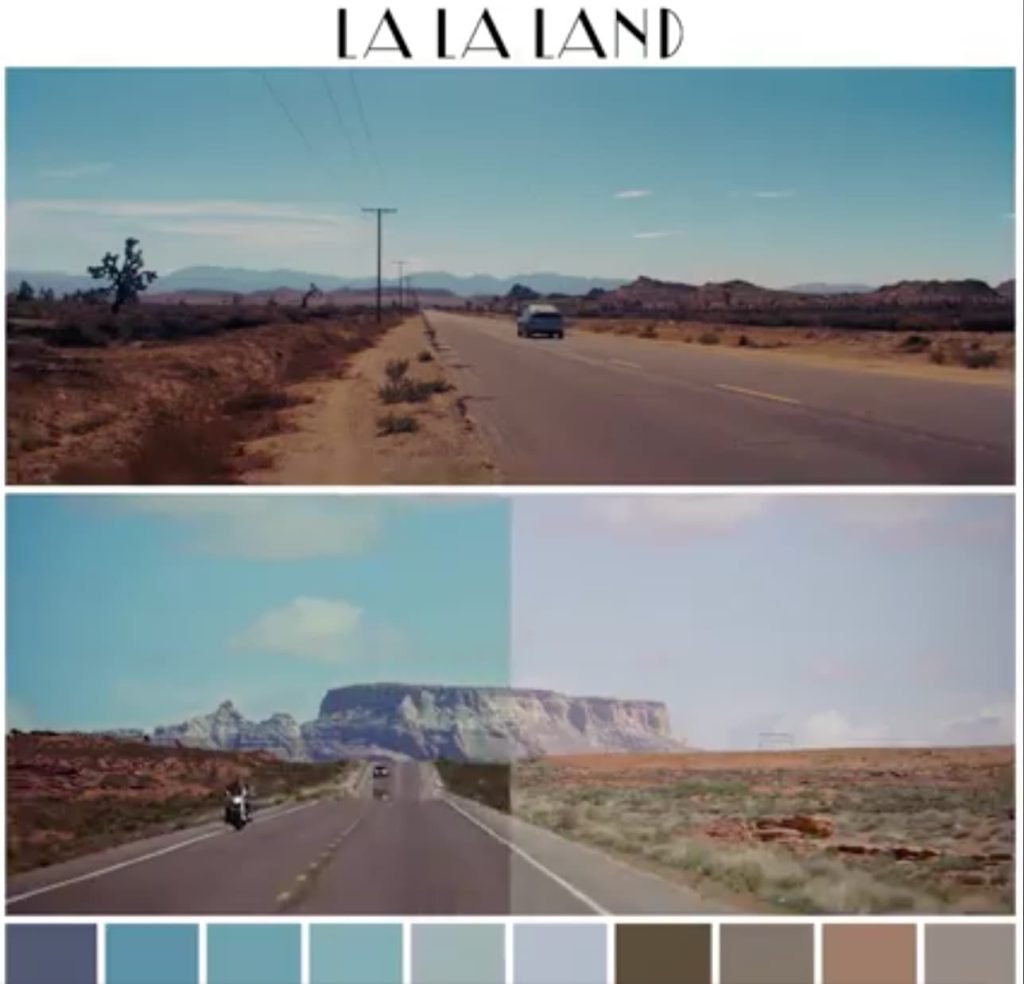
Source: movieluts.gumroad.com
-
 Podcast Pack Sony 4Starting at: 348,75€
 -
Sony Podcast Pack 3Starting at: 255,00€
-
Podcast Pack Sony 2Starting at: 240,00€
How AVisual PRO Can Help You with Your Film Project
At AVisual PRO, we are committed to providing the best equipment and support to ensure your audiovisual projects are a success. Contact us today and discover how we can help you take your production to the next level.
We are specialists in high-quality audiovisual equipment rental for your film and video projects. We offer a wide range of cameras, lenses, and accessories, ensuring you have the right tools to capture your vision. Additionally, our team of experts is available to advise you on the best equipment and configuration for your project.
Why Choose AVisual PRO?
Variety and quality: We have the latest technologies and recognized brands in the industry.
Technical support: Our team of professionals is ready to help you every step of the way.
Flexibility: We offer rental plans that adapt to your needs and budget.
-
 Diopter Filter +1Starting at: 7,50€
 -
 Diopter Filter +2Starting at: 7,50€
 -
7Artisans 3-Lens Kit 35mm, 50mm, 75mm Dream EStarting at: 45,00€